
As a young woman, I could have chosen easy rebellion, coasting through a carefree, uninhibited life. Or I could have opted for the safe, traditional route—landing a stable job, settling down, and quietly living out my days.
Instead, I chose to chase my dream. Because I believe that no matter who you are, everyone has the right to build the life they want.

From an Unruly Delinquent Girl to a Top Student in NTU Finance
It was May 11, 2015. On an early morning in Beijing, right after a sudden downpour, I stood on our company's 21st-floor terrace looking over the concrete jungle of Guomao. Breathing in the rare fresh air and finishing the last drop of Dongding Oolong in my cup, I reflected on my first six months as a "Beijing drifter." In this chaotic, bustling city, how many people commute every day just to go through the motions? And how many, like me, are trying to write a different kind of story?
My name is Shao-Yi Peng. I graduated with a degree in Finance from National Taiwan University (NTU). But more importantly, I come from a long line of tea farmers in Nantou, Taiwan. In 2014, I quit my high-paying, stable job in Taipei, packed my bags, and moved to mainland China alone to launch my own office tea brand.
My story starts in the tea fields. Growing up in a traditional tea-farming family, my sharpest childhood memories are the crunch of peanut shells under my grandfather's boots as he walked the tea ridges, and the rich, grassy scent that flooded the factory when my uncle roasted the leaves.
But I never thought of tea as something polite or constrained. Even as a kid, I knew that wild, untamed tea trees could tower twenty meters high, forming dense, imposing forests. The tea brewed from those leaves is fierce, strong, and unapologetic—to me, that is the true essence of tea.
Growing Like Wild Tea
I was a restless kid. Academically, I excelled, coasting through gifted classes from elementary through high school, but I was never really satisfied. I treated good grades as a chore—the bare minimum required to fulfill my duty as a "good student" and a "good daughter." Once that box was checked, I felt entitled to whatever I wanted.
Knowing my teachers favored me, I pushed boundaries constantly. I dyed my hair a rebellious flaxen blonde—a big deal during Taiwan's strict school dress codes—wore it in a high ponytail, and provoked fights outside the school gates. I swore like a sailor, skipped piano lessons to spend the money at internet cafes, stayed out all night, and dated the biggest troublemaker in school.
"If I like it, why not?" was my motto. The result? A body marked with seven distinct scars from various fights and reckless escapades.
But I was also deeply imaginative. I started writing fiction in the third grade. My protagonists were always slightly veiled versions of myself—facing danger, navigating romance, and surviving against all odds. Real life felt far too predictable; I craved the thrilling, life-or-death stakes of the worlds I invented.
Even while succeeding in the system, I fought against it. I refused to lose or back down. The more people tried to box me in, the harder I pushed back. I didn't want to be the obedient "good girl." I wanted to be the wild force hiding inside every good girl. I wanted to grow untamed, just like the tea I loved.
Family Upheaval and Transformation
In 2008, the global financial crisis hit. Stocks tanked, companies enforced unpaid leave, and my family's finances cratered. I was a freshman in high school.
When I stumbled upon a house mortgage contract stashed in a drawer, and the car picking me up from school downgraded from a smooth Lexus to a tiny Nissan March, I knew things were bad. The reality fully struck when I walked past a half-open bedroom door and heard my mother weeping, telling my father that a friend's company had scammed them out of 5.6 million NTD.
The stress shattered my previously cheerful mother. She developed severe depression and terrifying panic attacks. She couldn't drive for more than ten minutes at a stretch—stay in an enclosed space too long and a panic attack would drop her into the absolute certainty that she was about to die. She couldn't go out alone either, because the vertigo that came with it meant she might faint mid-step.
Watching families around us collapse under similar pressures, I finally grasped how fragile the world really was. Here I was, picking petty fights and seeking cheap thrills, completely oblivious to the real, devastating chaos of adulthood.
My mom tried to shield me from the worst of it, and I pretended everything was fine, acting as if money was just a little tighter. But something inside me was shifting.
The breaking point arrived at the dinner table. Out of nowhere, my mom put down her chopsticks. Her eyes were red, though she refused to let the tears fall. "Maybe I should just kill myself," she whispered. "At least then you guys could collect the insurance money."
It remains the most helpless I have ever felt. In that instant, the rebellious, reckless girl inside me shattered completely.
I didn't say a word. Instead, I channeled every ounce of my aggression, anger, and stubbornness into my textbooks. I studied with a desperate, obsessive intensity. I lived between my classroom and the study hall, stacking completed practice workbooks beside my desk from the floor to my knees, over and over again.
Every night, the study hall closed at 10 PM. At exactly 9:45 PM, I would go up to the roof, stare silently at the night sky for ten minutes, and head back down to pack my bags as the closing music played over the intercom.
When the 324-day countdown finally hit zero, I walked out of my college entrance exams and knew exactly what I was going to do. I listed only one choice on my application: the Department of Finance at National Taiwan University.
That year, exactly two students from all of Hsinchu got into NTU's Finance department—one boy and one girl. I was the girl.
The day I moved into my dorm, after my parents drove away, I found a handwritten note from my mom on my bookshelf: "You may live in the city now, but your roots are in the tea gardens. Take care of yourself, eat well, and don't be too frugal." Underneath the note was 8,000 NTD. I only learned later that, given our family's dire financial situation, my college tuition was heavily subsidized by the tea farmers back in my hometown.
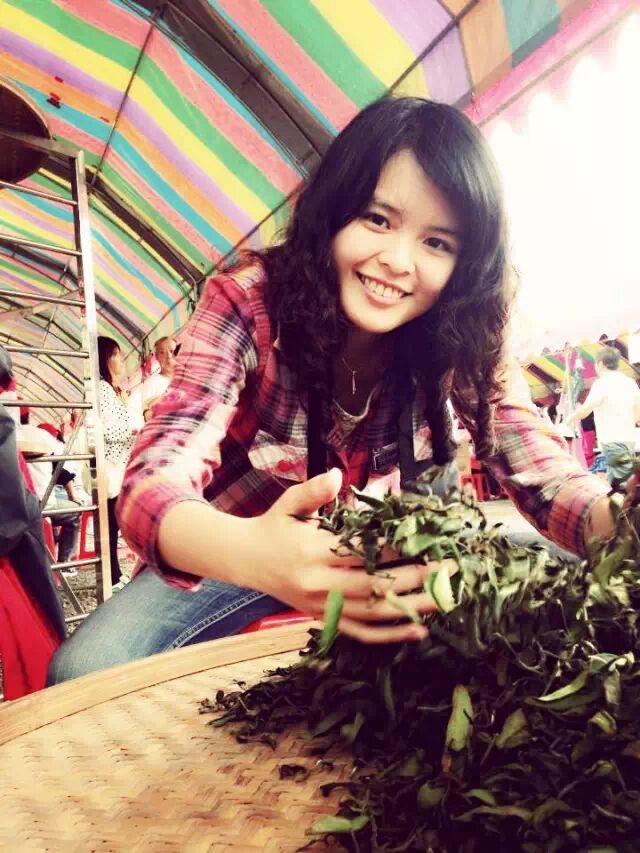
No Matter How Wild, We All Sprout Roots
My four years at NTU were a blur of typical overachievement. I joined the student council, ran for student parliament, organized training workshops, starred in a short film, and played golf. I fretted over roommates' early alarms, cried over boyfriends, and went out for late-night meals. On the surface, I had completely normalized.
Our business school constantly invited wealthy, successful alumni back to speak. Watching them in their tailored suits, speaking eloquently about corporate life, I naturally pictured myself in their shoes. I wanted to climb the corporate ladder, make a fortune, and return one day as the esteemed speaker.
I kept myself ruthlessly busy, terrified that if I ever paused, I'd fall behind.
But occasionally, the noise would fade, and I'd feel completely lost. I interned as a magazine editor, wrote newspaper columns, and even co-founded an educational consulting startup with friends. But once the startup began turning a profit, I realized it wasn't the meaningful "education" venture I had dreamed of—it was just a cash grab. I walked away.
Despite taking every elective course I could find on tea, I treated it as just a hobby. When a senior student scoffed, "You didn't go to NTU Finance just to go back home and sell tea, did you?" the little spark I had for my family's craft was instantly smothered.
Trading the High Life for a Startup in Beijing
Naturally, I took a job at a top-tier executive search firm in Taipei's Xinyi District, the city's commercial and financial heart. I wore nice clothes, made phone calls, interviewed candidates, and felt incredibly polished.
Whenever I met new colleagues or clients, I would bring some of my family's premium tea as an icebreaker. To my surprise, I realized that hardly anyone in these high-end offices actually drank good tea—or even knew what good tea tasted like. I started brewing it for my coworkers, and seeing their eyes widen in surprise became the best part of my day.
Word eventually reached my boss. Knowing my background, she pulled me into her office and said, "Our job is helping people find the careers they are meant for. If you can't even be honest about what you want for yourself, how can you possibly help anyone else?"
Her words hit hard. I had a great job, a good salary, and a boss who liked me—everything I thought I wanted. But I felt like I was walking through a fog. Did this incredibly successful woman actually think I belonged in the tea business?
In July 2014, egged on by a close friend, I flew to Beijing for a cross-strait startup forum run by the GYL Global Youth Leadership Alliance. I still didn't have a concrete plan, but the idea of bringing my hometown tea to the massive mainland Chinese market was simmering.
During the summit, I met Pan Xinwang, a student from Nankai University who would later become my co-founder. I hadn't told anyone about my tea idea until one evening when our group was complaining about the terrible tea the hotel provided. I quietly pulled out my own stash. Xiao Pan immediately perked up. "Wait," he said, "Are you trying to start a business?"
That night, our entire group bonded over startup ideas until dawn. Xiao Pan, who already had some tech and startup experience, pushed me to pitch my idea at the forum's final roadshow. "Stop thinking about it alone. Pitch it to the investors and see if the idea has legs."
I threw together an incredibly ugly but deeply earnest PowerPoint. Standing in front of five judges, I was terrified, but the moment the slides reached my family's tea fields and my family's faces, my nerves vanished. Every sentence came out certain, as if I had been built for this.
When my five-minute pitch ended, the room erupted into applause. I knew my life was never going to be the same.
Xiao Pan and I stayed in touch. After a few months of market research and his visit to the tea mountains in Taiwan, we decided to jump in. I booked a one-way ticket to Beijing for October 19.
When I told my family, they were supportive but terrified. "Why Beijing? You don't know anyone there. What if it's dangerous?" I pretended I would think about it, then bought the non-refundable ticket anyway. I am notoriously indecisive about what to eat for lunch, but when it comes to life-altering choices, I don't hesitate. Realizing they couldn't stop me, my family hurriedly packed some premium tea leaves, a few tea sets, and 12,000 NTD in cash, and sent me on my way.
Xiao Pan was equally committed. He turned down several job offers, roped in a few talented friends, and joined me full-time.
Embracing the Grind
Life in Beijing was incredibly harsh, and I absolutely loved it.
We rented a cheap, freezing apartment near Renmin University. My bedroom barely fit a bed and a tiny desk; my wardrobe held exactly five shirts. The heating was basically nonexistent. Xiao Pan's room didn't even have a window. We shared a single bathroom with a dozen other tenants and had strictly rationed hot water. We could hear our neighbors' every conversation through the paper-thin walls. I didn't dare tell my parents how we were living; they would have dragged me home immediately.
But we weren't deterred. I had the tea expertise, and my team had the mainland "internet savvy" that I lacked. For the first two months, we networked like crazy, crashing every startup event, accelerator, and alumni mixer we could find.
To do our market research, I shamelessly asked the founders I'd just met if I could hang out in their offices. I would sit for hours like a creep, taking notes on how often employees visited the pantry, what they drank, and how much time they spent socializing. This on-the-ground recon is what ultimately led us to build an "office tea" brand.
Once incorporated, we spent a grueling month perfecting the product. I worked with my uncle—a master with 36 years behind the leaf—to test 13 different ways of making Dongding Oolong. We sourced filter bags in every material and shape from suppliers in Japan, Taiwan, and the mainland, until we had enough samples to open a coffee shop. The printing factory eventually told me to just come sit with them for a full day and dial the quality in myself, because I kept sending the proofs back.
Somewhere in that month I realized something that contradicted everything I'd assumed back in Taiwan: the mainland and Taiwan are, at bottom, the same. The same drive, the same dreams, the same insistence on getting the product right. The only difference is in how it gets executed.
I also found that none of the roads I'd walked and written off as wrong had been wasted. The office job gave me a read on people. The failed college startup meant I didn't repeat the same misstep. My teenage rebellion gave me the refusal to bow to circumstance. People assumed that quitting my job to start a company meant starting from zero. It wasn't zero at all—it was everything from the previous twenty-odd years finally being put to use.
People told us young people don't drink tea, that we'd aimed at the wrong market, that the business model wasn't novel enough—or laughed that instead of building a market the slow way, I'd do better to just sleep with someone who already had one. Every one of those only set my resolve harder.
At one startup mixer, a junior from Xiao Pan's program sized me up after hearing I'd come to the mainland to sell tea, and told me I had the air of a Taiwanese mob boss's daughter—which left me somewhere between laughing and crying. At that same event, after a long talk, a battle-scarred investor said there was something unusual in my eyes, that I was clearly someone who had a story behind her.
My old boss happened to be in Beijing over Qingming and asked me to lunch. Remembering what she'd said to me, I opened with, "Well, boss, I know what I want now. Want to try our tea?" She burst out laughing: "Looks like you're doing all right." Compared to the professional smile I used to wear every day, I had gone back to being myself. The real one. The fearless kid I'd been had been sanded down by growing up and learning to behave, and if I wanted to carve out anything of my own, I needed her back.
In those first 199 days, my skin grew more than ten times thicker—from begging the gate attendant on the Beijing–Tianjin intercity line to let me through when I'd already missed my train, to haggling with suppliers, to getting people to design, write, and promote for us for free. Any back road that saved money or time, we took, so that a team this small could survive in the gaps between the waves.
My wallet grew more than ten times thinner: money in, money borrowed, bills on credit, money earned, money paid back. Even now, with our first round of funding closed, I have never once paid the team a salary. What carried us was my family's unconditional support, my team pulling in one direction, our investors' trust—and most of all the tea drinkers, from Guangzhou in the south to Heilongjiang in the north, who kept us company through all of it.

What Entrepreneurship Actually Means
From October to now, I've wrestled with customs, been stood up by suppliers, and been asked by countless people, "You're still selling tea?"
Even so, we launched our first-generation product, closed funding from TusPark Ventures, and landed an order from Credit Suisse. Looking back, what moves me isn't the stretch where everything went smoothly—it's the stumbling, and the people who stumbled alongside me.
That was when it landed: no one gets to take, endlessly and only take. When everything you assume is your due arrives, have you asked what you've given back? I finished college through my family's worst years because the tea farmers at home put out a hand. I met people who wanted the same things I did, and carried good Dongding Oolong 1,840.018 kilometers from my hometown to Beijing, because cross-strait exchange had deepened enough to make it possible.
Tea is my childhood memory, the sprite that grew up alongside me. I miss those years with tea for company, miss running through the bushes across whole hillsides. And now she is being set down and forgotten by my own generation, displaced by imported Western culture. I want to use whatever ability I have to pass that sweetness and fragrance on, to every generation after mine. That, to me, is the real responsibility of entrepreneurship—not just making money or chasing fame, but creating something that gives back.
Over the New Year, an old middle school friend reached out. Now a married mother of a toddler, she asked me, "You had a great degree and a safe career. Why did you choose such a terrifyingly unstable path?"
I told her what I believe: for a woman, security isn't given to you by your parents, and it certainly isn't given to you by a man. It's what you get from chasing your own ideal. Tea is my ideal. Tea was my first companion as a child, and I expect to spend my life with her.
Education gives women the power of choice. But if we use those choices only to trap ourselves in safe, predictable boxes, then our education was wasted. We'll reach middle age sighing, "Well, an ordinary life isn't so bad."
I still don't know for certain if Summit Tea will become a massive empire. When I go back to Taiwan, people sometimes warn me, "Don't get swept up in the mainland startup craze. You're just a tiny ripple in a massive ocean."
I don't buy it. Because I know that when my conviction is clear, it isn't the era summoning me—it's me leading the era. As long as the dream keeps pointing the way, I'll never drift off course.
At the end of your life, "success" isn't the best metric. Living fiercely, fully, and without regrets—that is the only success that matters.